SmartMonitor in Automotive Industry
Unforeseen failures in automotive production lines can lead to sudden and unforeseen interruptions in the production process (in terms of timing and duration of line stoppages). This can result in significant financial losses on an annual basis.
Analyzing data collected from rotating equipment and identifying and detecting faults and failures as early as possible minimizes the risk of unplanned downtime.
Some of the equipment that can be monitored in the automotive industry:
- Various robots used in assembly and production lines for welding, painting, assembly, transportation, and quality control
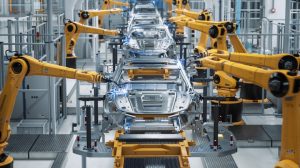
- Lifts and cranes used for handling heavy parts such as engines, gearboxes and chassis, assembly of parts and handling of materials
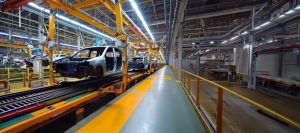
- Conveyors and various electric motors used in pumps, compressors, conveyors, fans, etc.

Benefits of using the SmartMonitor system in the automotive industry:
- Reduced downtime: By detecting faults early and enabling proactive maintenance, the SmartMonitor system can significantly reduce downtime, keeping equipment operational and production lines running smoothly.
- Improved product quality: By monitoring equipment health and preventing failures, the SmartMonitor system can help improve product quality by reducing the number of defects caused by equipment malfunctions.
- Reduced maintenance costs: By extending equipment life and preventing catastrophic failures, the SmartMonitor system can help reduce maintenance costs.
- Enhanced safety: By identifying potential safety hazards and providing timely alerts, the SmartMonitor system can help improve safety in the workplace.
- Optimized energy consumption: The SmartMonitor system can monitor energy consumption and identify potential energy inefficiencies. This information can be used to optimize energy usage, reducing costs and improving environmental sustainability.
How the SmartMonitor system works:
The SmartMonitor system consists of a network of sensors that collect data on various equipment parameters, such as vibration, temperature, pressure, and current. This data is transmitted to a central server where it is analyzed using advanced algorithms to detect faults and predict potential failures. The system then generates alerts and notifications to inform operators and maintenance personnel of potential issues, allowing them to take corrective action before a failure occurs.
Examples of how the SmartMonitor system is used in the automotive industry:
- Monitoring robot health: The SmartMonitor system can be used to monitor the health of robots, detecting faults such as bearing wear, motor overheating, and control system errors. Early detection of these faults can prevent catastrophic robot failures that can lead to significant downtime and production losses.
- Predicting conveyor failures: The SmartMonitor system can be used to predict conveyor failures by analyzing vibration data. This information can be used to schedule maintenance before a failure occurs, preventing unplanned downtime and ensuring conveyor reliability.
Overall, the SmartMonitor system is a valuable tool for the automotive industry, offering a range of benefits that can improve operational efficiency, reduce costs, enhance safety, and improve product quality.